
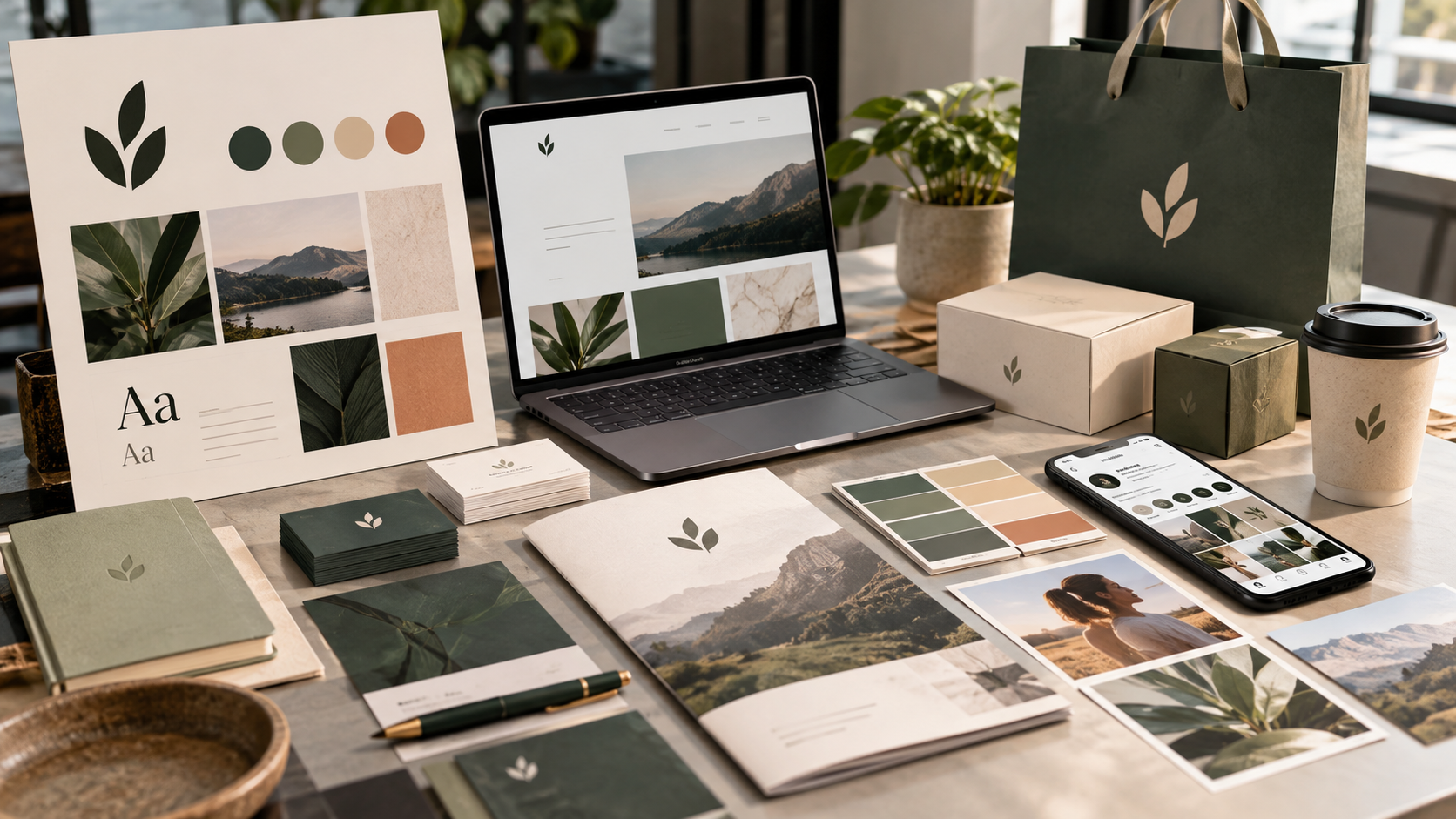
Learn what branding is, how graphic design builds a powerful brand identity, the difference between branding and marketing, and why strong branding matters for business growth.
What Is Branding? How Great Design Builds Powerful Brands
When you hear the word branding, what comes to mind?
A logo?
A colour?
A company name?
A catchy tagline?
All of these can be parts of a brand—but branding is much bigger than a logo.
Branding is the complete identity, personality, experience and perception people associate with a business.
It is the reason customers recognise a company, remember it, trust it and sometimes choose it even when there are dozens of alternatives.
And one of the strongest tools used to communicate that brand is graphic design.
In this guide, we’ll explain exactly what branding means, how graphic design plays a major role in branding, the difference between branding and marketing, and why building a strong brand should be a priority for every serious business.
What Is Branding?
Branding is the process of creating a clear and consistent identity for a business, product or service.
It defines:
- Who you are
- What you stand for
- Who you serve
- What makes you different
- How you communicate
- How you look
- How customers should feel when interacting with your business
Imagine your business as a person.
The business name is its name.
The logo is its face.
The colours and typography are its clothing.
The tone of voice is how it speaks.
Its values represent what it believes.
Its customer experience represents how it behaves.
All of these elements working together create the brand.
Your Logo Is Not Your Entire Brand
One of the biggest misconceptions in business is:
“I already have a logo, so my branding is complete.”
A logo is important, but it is only one part of your brand identity.
Strong branding can include:
- Logo design
- Brand colours
- Typography
- Graphic style
- Photography style
- Illustration style
- Icons
- Packaging
- Website design
- Social media design
- Marketing materials
- Signage
- Uniforms
- Business stationery
- Brand messaging
- Tone of voice
- Customer experience
When these elements follow the same direction, customers begin to recognise your business instantly.
That is the power of brand consistency.
Why Is Graphic Design So Important in Branding?
Brand strategy defines what your brand should communicate.
Graphic design determines how people visually experience it.
Customers often see your website, social post, advertisement, packaging, brochure or product before they ever speak to someone from your company.
That means design creates one of your first opportunities to make an impression.
1. Design Creates Recognition
Think about brands you recognise immediately.
Sometimes you don’t even need to see the company name.
A particular colour combination, typography style, shape or visual treatment can already tell you which brand it is.
That recognition doesn’t happen accidentally.
It comes from consistent brand identity design.
When the same visual system appears across your website, social media, packaging, advertisements, business cards and promotional materials, customers gradually connect those visuals with your company.
2. Design Communicates Quality
Imagine two companies offering the same service.
Company A has:
- An outdated logo
- Inconsistent colours
- Poor-quality images
- Different fonts everywhere
- Unprofessional marketing materials
Company B has:
- A professional visual identity
- Consistent colours
- Clear typography
- High-quality graphics
- A polished website
- Professional presentations and marketing materials
Before speaking to either company, which one appears more established?
Design influences perception.
Good graphic design doesn’t automatically make a company better—but it can communicate professionalism, organisation and attention to detail far more effectively.
3. Design Communicates Without Words
Good design can communicate:
Premium. Affordable. Modern. Traditional. Friendly. Technical. Creative. Corporate. Sustainable. Powerful. Minimal.
Often before the customer reads a single paragraph.
Colours, typography, spacing, photography and composition all send signals about your brand.
This is why professional graphic design should not simply make something “look nice.”
It should communicate the right message to the right audience.
Branding vs Graphic Design: What Is the Difference?
These terms are closely connected, but they are not the same.
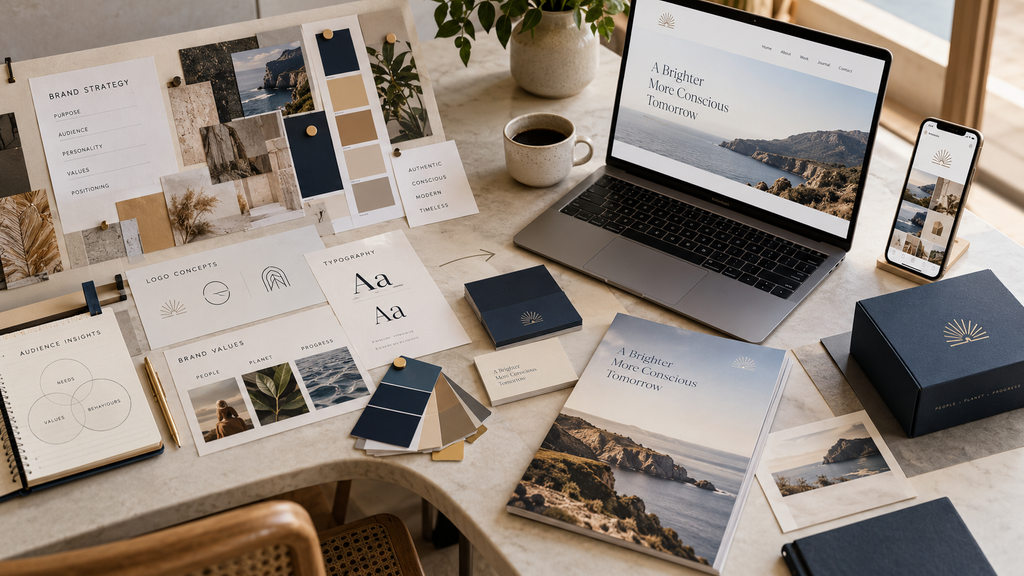
Branding creates the direction. Graphic design turns that direction into visual communication.
For example, branding may establish that your company should feel:
Modern, reliable, premium and innovative.
Graphic designers then translate those ideas into:
- Logo systems
- Colour palettes
- Typography
- Website layouts
- Brochures
- Packaging
- Presentations
- Social media graphics
- Advertising materials
- Digital content
Without branding, design can become inconsistent.
Without good design, branding can remain an idea that customers never fully experience.
The strongest businesses make branding and graphic design work together.
Branding vs Marketing: What Is the Difference?
This is another area where businesses often get confused.
The simplest explanation is:
Branding defines who you are. Marketing helps people discover you.
Branding
Branding focuses on:
- Identity
- Positioning
- Values
- Personality
- Visual identity
- Messaging
- Reputation
- Customer perception
- Long-term recognition
Branding asks:
“What should people think and feel when they experience our company?”
Marketing
Marketing focuses on attracting and communicating with potential customers through activities such as:
- SEO
- Google Ads
- Social media
- Email marketing
- Content marketing
- Advertising
- Video marketing
- Promotions
- Campaigns
Marketing asks:
“How do we reach the right people and encourage them to take action?”
A Simple Example
Imagine opening a premium coffee company.
Branding determines:
Your story, positioning, logo, colours, packaging style, photography, tone of voice and overall customer experience.
Marketing determines:
How people find your coffee through Google, Instagram, email campaigns, advertisements, influencer partnerships and promotions.
You can run a great advertisement and attract thousands of visitors.
But if they arrive at a confusing website with poor visuals, inconsistent messaging and no clear identity, the marketing has brought attention to a weak brand experience.
That is why branding and marketing need each other.
Why Branding Should Come Before Heavy Marketing
Marketing can generate attention.
Branding determines what people see when that attention arrives.
Before investing heavily in advertising, businesses should ideally have clarity around:
- Target audience
- Positioning
- Brand message
- Visual identity
- Website experience
- Brand consistency
- Customer promise
Otherwise every new campaign may look completely different.
One month the company looks corporate.
The next month it looks playful.
Then premium.
Then budget-focused.
Customers struggle to understand what the company actually represents.
A strong brand gives marketing a consistent foundation.
Why Is Branding Important for a Business?
Branding Helps People Remember You
Customers encounter hundreds of messages every day.
Businesses without a distinctive identity can easily disappear into that noise.
Consistent visual branding makes your company easier to recognise and remember.
Branding Builds Trust
People generally feel more comfortable dealing with companies that appear established and consistent.
Your website, social media, email signatures, proposals, brochures, advertisements and other customer touchpoints should feel like they belong to the same company.
Consistency creates familiarity.
Familiarity can support trust.
Branding Differentiates You From Competitors
Your competitors may sell similar products.
They may use similar technology.
They may even offer similar pricing.
But they cannot completely copy your:
- Story
- Personality
- Culture
- Brand voice
- Customer experience
- Visual identity
- Reputation
Strong branding gives customers a reason to remember you instead of simply remembering the service category.
Branding Can Support Premium Positioning
Why can two products with similar functionality sometimes have completely different prices?
Perceived value plays a major role.
Packaging, presentation, storytelling, design, service experience and reputation all contribute to that perception.
Strong branding can help a business communicate greater value before the customer even starts comparing prices.
What Makes a Strong Brand Identity?
A strong brand doesn’t need to be complicated.
It needs to be clear and consistent.
Successful brand identities usually have several important elements.
Clear Positioning
Customers should understand:
Who you serve, what you offer and why your business is different.
Memorable Visual Identity
Your logo, colours, typography, imagery and graphics should work together as one recognisable system.
Consistent Communication
Your website shouldn’t feel completely different from your brochure.
Your Instagram shouldn’t look unrelated to your packaging.
Your presentation shouldn’t look like it came from another company.
Consistent Brand Voice
If your brand is professional and authoritative, communication should reflect that.
If it is energetic and youthful, the language can reflect that personality.
Consistent Customer Experience
Branding does not stop with graphic design.
Response time, product quality, packaging, customer support, delivery and after-sales service can all influence brand perception.
Does Branding Help SEO?
Branding and SEO are different disciplines, but they can support one another.
Strong branding encourages consistent company information, clear expertise, recognisable messaging and useful content across a website and other digital channels.
As your company becomes better known, people may also begin searching specifically for your company name, products or services.
More importantly, your website should not exist simply to target keywords.
It should become a useful resource that clearly demonstrates who you are, what you know and how you help customers.
That’s why educational content like this article can play an important role in a long-term SEO and brand strategy.
When Should a Business Consider Rebranding?
You may need to review your branding when:
- Your logo feels outdated
- Your materials use inconsistent designs
- Your company has expanded into new markets
- Your services have significantly changed
- Your competitors look more professional
- Customers misunderstand what you offer
- Your website no longer represents your business
- Different teams use different colours, fonts and logo versions
- You want to move into a more premium market
Rebranding doesn’t always mean throwing everything away.
Sometimes businesses simply need a stronger visual system and clearer brand guidelines.
Branding Is an Investment in How People Remember Your Business
Marketing can bring someone to your business today.
A strong brand can help them remember your business tomorrow.
Branding isn’t simply a logo, colour palette or advertisement.
It is the complete impression created every time someone interacts with your company.
And graphic design is one of the most powerful ways to make that identity visible.
Your logo, website, packaging, social media, brochures, presentations, advertisements and promotional products should not feel like separate pieces.
They should tell one consistent story.
That is when graphic design stops being decoration and becomes a serious business tool.
Build a Brand People Recognise
At Weaver Graffic, we believe businesses deserve more than individual designs.
They need a creative partner who understands how every visual touchpoint contributes to the bigger brand.
From brand identity design and graphic design to websites, print materials, promotional products, presentations, apparel graphics and production-ready artwork, we help businesses create consistent visual communication across digital and physical platforms.
Your business deserves more than just a designer—it deserves a design partner.
Ready to strengthen your brand?
Talk to Weaver Graffic about your next branding or graphic design project.